Bernese Mountain Dog - Berner Sennenhund | Bernese Cattle Dog | Berner

No comments:
Introduction:
The  place of origin of Bernese Mountain Dog is Switzerland.  It is a breed of working group.  They are used as herding dog. The life span of the Bernese Mountain Dog is 7-10 years. The breed is also called as Berner Sennenhund, Bernese Cattle Dog. The nickname used for this dog is Berner.

Bernese Mountain Dog

Origin / History:
The Bernese Mountain Dog appeared in the mid-19th century
Due to their professional dog breeding these dogs became popular
The Bernese Mountain Dog were one of the earlier breeds to be recognized by many kennel clubs around the world
In 1907 the "Schweizerische Dürrbach-Klub", defined the Bernese Mountain Dog as a separate breed

Nature / qualities:
The Bernese Mountain Dogs are natural watch dogs. They are gentle, intelligent and cheerful dogs. They are good with other pets and dogs. They like to be among people. They are self-confident, alert and good natured dog. They should be socialized from a very young age. They are friendly with strangers. They are very loyal to their owners. They do not work for long time. The laziness in them gives them a genetic heritage to these dogs. In other words, they are less active.

Physical Appearance:
The height of the Male Bernese Mountain Dog is 24-28 inches (61-71 cm) and the weight is 85-110 pounds (38-50 kg). The height of the Female Bernese Mountain Dog is 23-27 inches (58-69 cm) and the weight is 80-105 pounds (36-48 kg). The Bernese Mountain Dog is a well-built, compact and heavy dog.  They have tri-color double coat with a beautiful weather resistant.  The color of the breed is black with tan and white markings.  They have white blaze with fur on the chest, head and toes. The eyes are dark which has rust markings. They have black color nose.  The ears are medium-size, triangular in shape. The tail is long and bushy. There are rust markings under the tail, on the cheeks, sides of the chest. The legs are strong with rust markings on each of them.

Health Concerns:
The Bernese Mountain Dogs are prone to bloat and eyelid problems, hip and elbow dysplasia. They gain weight easily so do not over feed them.

Grooming:
Weekly brushing is needed. Bathe them weekly to monthly. The ears and teeth should be cleaned regularly. The nails should be clipped every two weeks. Take them on long walks.

Cost:
The cost of purchasing this breed is $ 600 USD

Advantages:
They love children
They are very easy to train

Disadvantages:
They take time to mature
They need a great deal of attention in order to keep it happy and out of trouble

Belgian Tervuren - Chien de Berger Belge

No comments:
Introduction:
The Belgian Tervuren was developed in the country Belgium. It is a herding breed of dog, used for herding trials. The life span of the Belgian Tervuren is 10-12 years.  The other names used for this breed is Belgian Tervueren and Chien de Berger Belge.

Belgian Tervuren - Chien de Berger Belge

Origin / History:

  • The history is that the Belgian Tervuren were called as Continental Shepherd Dogs  during 1880s
  • In 1891 a club called the Club du Chein  de Berger Belge  (aka Belgian Shepherd Dog Club) was started to determine the  true shepherd dog belonging to Belgium 
  • The first Tervuren was imported in the US in 1953
  • The breed was acknowledge by the AKC in 1959
  • Today they are finally registered as a breed of their own 

Nature / qualities:
The Belgian Tervuren is an intelligent and alert dog.  They like to be entertained by the family and are wonderful pets.  They are very alert with strangers. They become your friend for life. They need to be socialized at very young age.  They are very protective and watchful of young children in the family.  The make a close bonding with their family members.  They have a demanding personality.

Physical Appearance:
The height of the Male Belgian Tervuren is 24-26 inches (61-66 cm) and weight is 65-75 pounds (29-34 kg). The height of the Female Belgian Tervuren is 22-24 inches (56-61 cm) and the weight is 60-70 pounds (27-32 kg). The Belgian Tervuren is a medium-size, slender and square shaped dog.  They have a solid muscular body. The eyes are almond shaped and dark brown in color. The nose is black in color. They have triangular shaped erect ears.  They have strong and straight legs that are parallel to the ground. The tail is long having abundant hair on it.  They have hairs on the body those fringes down the back and front legs. The color of the breed is shades of red or fawn with black tips.

Health Concerns:
The Belgian Tervuren is a hardy and healthy breed. But some of them have minor health problems such as epilepsy, skin allergies, eye problems, excessive shyness, excessive aggressiveness and occasionally seen hip dysplasia and elbow dysplasia. Do not over feed them as they soon become obese and lazy.

Grooming:
Weekly brushing is recommended.  They require lots of exercise.

Cost:
The cost of purchasing this breed is $ 900 USD

Advantages:
  • They protect the home in the absence of the family members
  • They make a great playmate and watchdog for children

Disadvantages:
  • They should not be left alone with very small children
  • They have a demanding personality, so not recommended for a first time dog owner


Belgian Sheepdog - Chien de Berger Belge

4 comments:
Introduction:
The place of origin of Belgian Sheepdog is Belgium.  They are herding breed of dog.  The Belgian Sheepdog is used for herding trials.  The life span of the breed is 10-12 years. It is also called as Belgian Sheepdog, Chien de Berger Belge.

Belgian Sheepdog - Chien de Berger Belge

Origin / History:
  • Nicholas Rose developed the breed in the late 1800s from a pair of all black shepherds
  • The Belgian Sheepdog was bred for herding and protection by Mr. Rose
  • They have also been used as a military dog, police dog, search and rescue dog
Nature / qualities:
The Belgian Sheepdog is an intelligent, protective and gentle dog. They are independent, alert and active dog.  They respond quickly to the slightest sound of disapproval in the owner’s voice.  If they are properly socialized then they will be very well-adjusted and well-balanced dog. They love to have attention from everyone.  They are very protective, so care should be taken when you introduce any strangers or new people.  Training should be given perform well with other dogs and pets.

Physical Appearance:
The height of the Male Belgian Sheepdog is 24-26 inches (61-66 cm) and the weight is 65-75 pounds (29-34 kg). The height of the Female Belgian Sheepdog is 22-24 inches (56-61 cm) and the weight is 60-70 pounds (27-32 kg). The Belgian Sheepdog is very athletic, strong and muscular dog. They have wise set, dark brown eyes. The nose is dark.  The ears are erect and completely triangular in shape. The legs are straight and well formed. The tail is long and curls slightly upwards. The color of the breed is black.

Health Concerns:
The Belgian Sheepdog is naturally a healthy and hardy breed.  But some are prone to minor health concerns like epilepsy, skin allergies, eye problems, excessive shyness, excessive aggressiveness and occasionally seen hip dysplasia and elbow dysplasia. They become obese and lazy so do not overfeed them.

Grooming:
Frequent brushing is required to remove the dead hair.  They need to be exercised mentally and physically.

Cost:
The cost of purchasing this breed is $ 850 USD

Advantages:
  • Good companion dog
  • Excellent watchdog
  • They get along with small children and family very well
Disadvantages:

  • They become over aggressive if not properly socialized
  • Not highly playful dog


Belgian Malinois

No comments:
Introduction:
The Belgian Malinois was developed in Belgium.  It is a herding breed.  They are used as a guardian, assistance and herding trails. The life span of the breed is 10-12 years.  The breed is also called as Belgian Malinois, Chien de Berger Belge, Mechelaar, Mechelse Herder (Mechelse Scheper), Pastor Belga Malinois.

Belgian Malinois

Origin / History:
  • The Belgian Malinois was developed in Belgium in 1900s
  • The Belgian Malinois was recognized and registered by Club Societe Royale de St. Hubert in 1901 
  • In 1911, the first Belgian Malinois was imported in the United States and recognized by the AKC (American Kennel Club).
  • They were also recognized as a part of the herding class of dogs
Nature / qualities:
The Belgian Malinois is a loving and playful dog.  They are very protective and territorial to their owner and home. They make very close bond with one or two people and become loyal to them. They need to be socialized from a young age, or else they may become shy.  They are very alert dogs. They love to be among family and do things.  They can be trained easily. They are either too aggressive or too shy.

Physical Appearance:
The height of Belgian Malinois is 22-26 inches (56-66 cm) and the weight is 55-65 pounds (24-29 kg). The Belgian Malinois is a medium-size, muscular and hard working dog. Its body is almost as long as it is tall. They have almond-shaped, dark eyes. The nose is dark.  They have erect and alert ears.  The tail is long. Their legs are long and strong.  The color of the breed is rich fawn to mahogany, with black tips on the hairs giving an overlay appearance. The mask and ears are black. The underparts of the body, tail and breeches are lighter fawn, but washed-out fawn color on the body is a fault. The tips of the toes may be white, and a small white spot on the breastbone/prosternum is permitted, not to extend to the neck.

Health Concerns:
The Belgian Malinois is generally a healthy breed with no major health problem. However there are some health concerns like skin allergies, eye problems, excessive shyness, excessive aggressiveness and occasionally seen hip dysplasia and elbow dysplasia.

Grooming:
Daily grooming and regular brushing is needed in order to maintain the healthy coat. Lots of regular exercise should be provided to them along with running and jogging.

Cost:
The cost of purchasing this breed is $ 1200 USD

Advantages:
  • Good watch dogs
  • Excellent police dogs
  • They get along well with cats and other animals if properly socialized
Disadvantages:
  • They tend to be dominate with other dogs


Bedlington Terrier - Rothbury Terrier | Rodbery Terrier

No comments:
Introduction:
The Bedlington Terrier was originated in England. They are terrier breed of dogs. They are used as an earth dog. The life span of the Bedlington Terrier is 15-17 years. The breed is also called as Rothbury Terrier, Rodbery Terrier.

Bedlington Terrier - Rothbury Terrier | Rodbery Terrier

Origin / History:
  • Old Flint, that belonged to Squire Trevelyan is the first male Bedlington Terrier that was officially listed
  • In 1877 The Bedlington Terrier Club in England was established
  • In 1948 the Bedlington Terrier was recognized by the United Kennel Club 
  • The first Bedlington to be recorded in the American Kennel Club Stud Book was W.S. Jackson's "Annanias."
Nature / qualities:
The Bedlington Terrier is a loyal, lively and cheerful dog. Teach them to like cats and other household animals. They are friendly with strangers. They are playful dogs. They easily get along with other dogs, except to the dominate ones.  They run very fast.   They like to bark, so need to be told that enough is enough. They are an enthusiastic digger. They have proved to be an excellent watch dogs.  They love to chase game.

Physical Appearance:
The height of the Male Bedlington Terrier is 16-17 inches (41-43 cm) and the weight is 18-23 pounds (8-10kg). The height of the Female Bedlington Terrier is 15-16 inches (38-41 cm) and the weight is 18-23 pounds (8-10 kg). The Bedlington Terrier has a lamb-like appearance. They are very graceful and medium in size.  They have narrow and rounded head.  They have dark, small and shiny eyes. The color of the nose depends on the color of the dog, it is either black or brown.  They have dropped ears that are long with thin leather and covered with hair that forms a tassel at the end.  The feet are covered with hair.  The tail is long and thin and sickle-shaped. The color of the breed is blue, sandy or liver, with or without tan markings.

Health Concerns:
The Bedlington Terrier is prone to a serious health problem called Copper Storage Disease. This genetic disorder allows copper deposits to build up in the liver, eventually leading to cirrhosis and death. They are also prone to hereditary kidney disease, PRA, thyroid problems and eye problems, such as cataracts and retinal disease.

Grooming:
Weekly brushing is needed along with regular trimming to maintain the breed’s look. They need to be given mental and physical exercise.

Cost:
The cost of purchasing this breed is $ 1200 USD

Advantages:
  • They are loving with children 
  • They are energetic and courageous

Disadvantages:
  • Sometimes they become obsessive barkers
  • They are less good with other animals


Beauceron- French Shorthaired Shepherd

No comments:
Introduction:
The Beauceron was developed in France.  It is a herding breed of dog.  It is used as a guardian and watch dog. The life expectation of the Beauceron is 10-13 years. It is also called as French Shorthaired Shepherd, Beauce Shepherd, Berger de Beauce, Bas Rouge (Red Stocking).

Beauceron- French Shorthaired Shepherd

Origin / History:

  • In 1809, the abbey Rozier reported plain dogs guarding flocks and herds
  • The two types of sheep dogs were differentiated by Pierre Megnin, in 1863
  • The dog with a short coat came to be known as Berger de Beauce (Beauceron)
  • The dog with a long coat was known as Berger de Brie (Briard)
  • They were used as messenger dogs during the world wars

Nature / qualities:
The Beaucerons are kind to their masters. They are intelligent and calm dog. They easily get adapted to new situations.  The owner should be strong but harsh to have this breed.  They do not like to be alone and idle. They perform well with other animals and children.  They are excellent companion and guardian dogs.

Physical Appearance:
The height of the Male Beauceron is 26-28 inches (65-70 cm) and the weight is 70-100 pounds (32-45 kg). The height of the Female Beauceron is 25-26 inches (61-68 cm) and the weight is 65-85 pounds (30-39 kg). The Beauceron is a large, well-built and solid dog.  It is a rectangular shaped dog. The head is long.  They have dark eyes and the nose is black. They have short, dropped, erect ears that are set high.  The tail is slightly curved at the end. The color of the breed is black and tan, harlequin (black and tan ith blue-gray patches.

Health Concerns:
The Beaucerons are prone to hip dysplasia, Progressive Retinal Atrophy, Gastric torsion / Bloat.

Grooming:
Brushing should be done twice in a week. During shedding season brushing should be done daily. Regular exercise and long walks is recommended.

Cost:
The cost of purchasing this breed is $ 800 USD

Advantages:
  • It is an ideal watch dog
  • They do not bark unnecessary 

Disadvantages:
  • They become both reserve and frank when meeting strangers


Basset Hound

No comments:
Introduction:
The Basset Hound was developed in France.  The dog is a hound breed. The breed is used as field trails, tailing rabbits,  and also used as basset field trails. The life span of the breed is 8-12 years.  The nick name of dog is Basset.

Basset Hound

Origin / History:

  • The description of the first breed is in Shakespeare’s A Midsummer Night’s Dream
  • The first Bassets in England were named as Basset and Balle, that was bought by Lord Galway in 1886
  • In 1885 the  Basset Hound was recognized as a breed by the American kennel Club 
  • The Basset Hound Club was organized in US in 1935
Nature / qualities:
The Basset Hound is a well-behaved dog.  They have a very peaceful nature.  They are sweet, gentle and devoted to family life.  They are loving and very affectionate with their masters.  It does not have the tendency to snap at children. They have a deep musical bark.  They are obedient if trained properly.  They love to eat and can be trained easily to do tricks.  They are gentle and patient with lots of love and kindness.  They have a sweet gentle look on its face. They have good sense of smell.

Physical Appearance:
The height of the Male Basset Hound is 12-15 inches (30-38 cm) and the weight is 50-65 pounds (23-29 kg). The height of the Female Basset Hound is 11-14 inches (28-36 cm) and the weight is 45-60 pounds (20-27 kg). The Basset Hound is a short-legged, medium-size and heavy-boned dog.  The head is large and wide, covered with loose, wrinkled skin.  They have dark eyes with drooping lower eyelids.  They have dark nose with large nostrils.  The ears are long, broad and set low.  The tail is long and slightly curved upwards.  The color of the breed is Foxhound colors of black, tan and white or these in combination.

Health Concerns:
The major health concern of the Basset hound is obesity. Do not over feed them.  They are also prone to paralysis because of short legs and a heavy, long body.

Grooming:
Weekly brushing is recommended. Regular exercise should be given to them.

Cost:
The cost of purchasing this breed is $ 400 USD

Advantages:
  • They are very friendly with children
  • They are not dog aggressive

Disadvantages:
  • They have low level of excitability and general activity
  • They do not make good protectors of home and property.


Bearded Collie | Highland Collie | Mountain Collie | Hairy Mou'ed Collie

No comments:
Introduction:
The Bearded Collie was originated in the country of Scotland.  The Bearded Collie is a herding breed of dog. It is used for herding trails and a popular family dog. The life span of the Bearded Collie is 12-15 years. The breed is also called as Highland Collie, Mountain Collie, Hairy Mou'ed Collie, Argle Bargle. The nickname used for the breed is Beardie.

Bearded Collie

Origin / History:
  • The Bearded Collie was first introduced in Scotland in 1514
  • The first litter of the Bearded Collie was born in 1967 in US
  • The Bearded Collie was recognized by the Kennel Club of Great Britain  that was brought by G.O. Willison in 1959
  • The dogs were used as herding dogs and companions in Great Britain and US
  • The breed was officially recognized by AKC in 1977
  • It is one of the largest clowns in the canine world

Nature / qualities:
The Bearded Collie has a very charming nature.  They are always joyous and affectionate. The tail of the dog always wags. They are noisy barkers. They like to jump up to greet you, kiss your nose and look straight into your eyes.  They easily intermingle with other animals. The males are more bold and outgoing, while females are calm and more submissive. They like to be among people.

Physical Appearance:
The height of Bearded Collie is 21-22 inches (53-56 cm) and the weight is 40-60 pounds (18-27 kg). The Bearded Collie is a medium-size dog.  The Bearded Collie is robust, hardy and active dog. The eyes are large that are set wide apart and matches color with its coat.  The nose is large and square. The dropped ears are of medium-size.  The tail is long and carried low. The wags when the dog is excited. The color of the breed is black, blue, brown, or fawn, with or without white markings.

Health Concerns:
The Bearded Collie is prone to hip dysplasia, Cataracts, Black hair follicular dysplasia.

Grooming:
Brushing, combing and matting should be done several times a week.  The nails should be trimmed regularly.  The teeth and ears should be kept clean.  They need lots of regular exercise. A daily walk is recommended to keep the breed healthy.

Cost:
The cost of purchasing this breed is $ 900 USD

Advantages:
  • They have a lovely sense of humor and are very playful
  • Perfect companion and wonderful with kids

Disadvantages:
  • Not a watch dog


English Beagle

No comments:
Introduction:
The place of origin of Beagle is England. But its ancestors are possibly from France or Greece. The dog is a hound breed. Today it is used for filed trails and trailing or pursuing rabbits.  The life span of the breed is 12-13 years.  It is also called as English Beagle.

English Beagle

Origin / History:

  • The Beagle is one of the most popular scent hounds
  • The Beagle was developed in great Britain about 150 years ago
  • In 1884, Beagle was accepted as a breed by  the American Kennel Club
  • Beagles boast a 90% accuracy in sniffing out contraband at airports
  • From 1953 to 1959 the Beagle was ranked number one on the list of the American Kennel Club's registered breeds
  • In 2005 and 2006 they ranked 5th out of the 155 breeds registered

Nature / qualities:
The Beagle is brave, intelligent and very sociable. They are one of the most expressive breeds. They are generally good with other dogs. On the other hand they should not be trusted with non-canine pets because of their hunting instincts.  The Beagles are sweet, gentle, lively and very curious dog.  They have one of the strongest noses in doghom.  They very possessive of food, they won’t leave food left in the kitchen.  They are very happy dogs. They would become disastrous if enough time and stimulation is not given to them. They have become popular family pets because of their calm and nature. They are always ready to learn.

Physical Appearance:
The height of the Male Beagle is 14-16 inches (36-41 cm) and the weight is22-25 pounds. The height of the Female Beagle is 13-15 inches (33-38 cm) and the weight is 20-23 pounds (9-10 kg). The Beagle is a small dog and lean dog. It is slightly longer than it tall. They have brown or hazel eyes that show pleading expression.  The nose is black, showing full nostrils for scenting.  They have long and wide ears. The tail is high and tight.  The color of the breed is any hound color; most common are black, tan and white; red and white; and pale tan and white. Feet and tail tip should be white.

Health Concerns:
The Beagle is naturally strong and healthy breed.  But some are prone to epilepsy, heart disease, eye and back problems, chondroplasia.

Grooming:
Weekly brushing is required for this breed.  The toenails should be clipped. The teeth and ears should be kept clean to prevent infections. Proper amount of physical and mental exercises should be given to them.

Cost:
The cost of purchasing this breed is $ 600 USD

Advantages:
  • The Beagles loves everyone, a happy little tail-wagger
  • Excellent with children 
Disadvantages:
  • They become very much destructive and bark obsessively when left alone


Basenji - African Bush Dog

No comments:
Introduction:
The place of origin of Basenji is Zaire. The dog is a hound breed. Today it is used as lure coursing. The life span of Basenji is 10-14 years. The Basenji is also called as African Bush Dog, African Barkless Dog, Ango Angari, Congo Dog, Zande Dog.

Basenji - African Bush Dog

Origin / History:
  • The early Basenjis were brought from Central Africa to Egyptian pharaohs as gifts
  • The credit for development of Basenji goes to Veronica Tudor Williams, who traveled through the remotest areas of Africa in search of specimens to better the strain
  • The Basenjis were used as hunting dogs, pointing, retrieving,  and bolting prey
  • Basenji resembles those dogs portrayed in tomb paintings from ancient Egypt 
  • In 1934 the Basenjis were brought to Europe under the name of Congo dog
  • In 1943 the Basenji was recognized by the American Kennel Club

Nature / qualities:
The Basenjis are very intelligent, alert and energetic dogs. They have close and strong bond with their family members and are very affectionate. They are distrustful to strangers and will circle them like prey if they are not supervised. They are very protective to their home and owners.  They need lots of exercise. If not given they become destructive. They are very playful dogs, so they love to run and climb over. If the owner likes to keep them in, then they need to have a high fence, as they like to climb. They are reserved with strangers and socialize well. They are not trusted with non-canine pets. They do not bark, but may yodel, howl, grow, or crow.

Physical Appearance:
The height of Male Basenji is 16-17 inches (41-43 cm) and the weight is 22-26 pounds (10-12 kg). The height of the Female Basenji is 15-16 inches (38-41 cm) and the weight is 20-25 pounds (9-11 kg).  The Basenji is a muscular, medium size and lightly built dog. The head is flat and wrinkled. The eyes are almond shaped and dark hazel to dark brown in color.  The nose is black in color. The ears are small and erect.  The tail curled and set high.  They have small and compact feet. The color of the Basenji is Chestnut red; pure black; tricolor (pure black and chestnut red); or brindle (black stripes on a background of chestnut red); all with white feet, chest and tail tip.

Health Concerns:
The Basenji is prone to Fanconi's syndrome (kidney problems), which must be treated the moment the symptoms are noticed. They are also prone to progressive retinal atrophy, intestinal, and eye problems.

Grooming:
Weekly brushing is recommended.  They need lots of exercise to remain healthy.

Cost:
The cost of purchasing this breed is $ 1200 USD

Advantages:
  • The Basenjis are patient and eager to please
  • They are well with older children as compared to young ones 

Disadvantages:
  • They chase small animals as they do not like and catch and kill them if given chance
  • They do not get along with other dogs


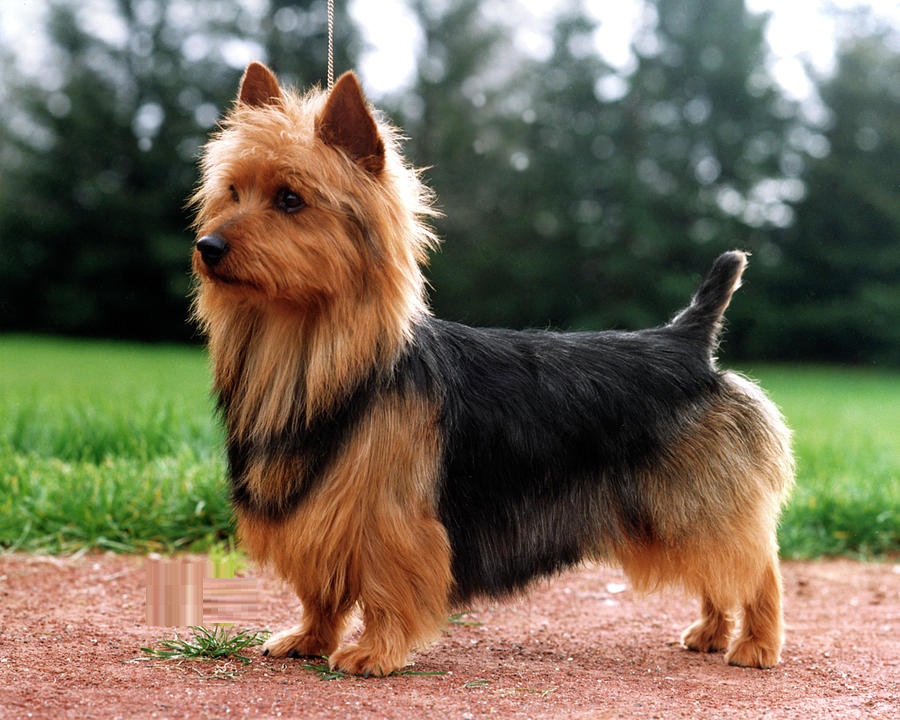
Australian Terrier - Aussie

No comments:
Introduction:
The Australian Terrier was developed in Australia. The dog is a terrier breed, especially used as a earth dog. The life span of the Australian Terrier is 12-14 years.  It is also called as Aussie as its nick name.

Australian Terrier - Aussie

Origin / History:
  • The Australian Terrier was developed in the 19th century by Australians
  • The Australian Terrier was welcomed for his skills  at dispatching the hated rabbit and killing the snakes
  • Aussie dogs and their shrill barks were also once ideal for their use as watchdogs on a frontier that still contained real dangers, well into the 20th century.
Nature / qualities:
The Australian Terrier is courageous, vigilant and alert dog. They like to bark.  They are quick learners. They are brave, lively and self-confident.  They become happy when able to romp and play. They are people friendly and enjoy interacting with people.  They are usually good with older children.

Physical Appearance:
The height of Australian Terrier is 9-11 inches (23-28 cm) and weight is 9-14 pounds (4-6 kg). The Australian Terrier is a small and sturdy dog.  The eyes are small with dark brown and black color. The nose is dark.  They have small ears that are erect and pointed.  The tail is docked to half its length and it is carried high but not over the back. The color of the breed may be blue with tan markings, clear sandy or red.

Health Concerns:
The Australian Terrier is generally a healthy breed that lives many years.

Grooming:
Weekly brushing should be done nicely and also some trimming around the feet and ears will keep this dog look neat and clean.

Cost:
The cost of purchasing this breed is $ 475 USD

Advantages:
  • They are excellent vermin destroyers  
  • It is beloved and faithful house pet

Disadvantages:
  • They are stubborn
  • Do not tolerate teasing from children
  • They are dog-aggressive with other terriers


Australian Shepherd - Little blue dog

No comments:
Introduction:
The Australian Shepherd dog was originated in the Basque region of Pyrenees, United States. It is a herding breed, used for herding trails and sheep herding. The life span of the Australian Shepherd is 14-16 years.  It is also called as Aussie or little blue dog as its nick name.

Australian Shepherd - Little blue dog

Origin / History:
The Australian Shepherd dog was developed in the 19th and the earlier 20th centuries
European settlers immigrating to the United States brought over many herding breeds to take care of the livestock
After World War II, they were used regularly in Western movies, television shows
The Australian Shepherd Club of America ASCA was founded in 1957 to promote the breed
In 1975, ASCA created a breed standard, by describing how this breed looks like
They became popular as performing dogs in rodeos

Nature / qualities:
The Australian Shepherd dog is intelligent, active and protective dog.  Aussies are used as hearing dogs for the deaf. They are eager to learn new tricks.  They are good natured. They love to play with the family members.  They love to be among the family. Some of them may try to herd the children by nipping at their heels.  Otherwise they are good with children.

Physical Appearance:
The height of the Male Australian Shepherd dog is 20-23 inches (52-58 cm) and the weight is 50-65 pounds (25-29 kg).  The height of the Female Australian Shepherd dog is 18-21 inches (46-53 cm) and the weight is 40-55 pounds (18-25 kg). The Australian Shepherd dog is a well-built, medium-size, athletic dog.  The skull is slightly rounded and the head is strong.  The eyes are almond-shaped and blue, amber in color, or any combination, including flecks or marbling.  They have dark nose. The ears are dropped and triangular in shape.  The four inches tail is straight and docked. The acceptable color of the body of the breed is solid red, solid black, blue merle and red merle, with or without white and/or tan markings. The front legs are strong and straight.

Health Concerns:
The major health of the Australian Shepherd dog is cataract, CEA. Minor concerns: CHD, nasal solar dermatitis, Pelger – Huet syndrome, iris coloboma. Occasionally seen: lumbar sacral syndrome, epilepsy, PRA, vWD, distichiasis, PDA, PPM, hip dysplasia

Grooming:
Weekly brushing should be done and it should be increased during the summer. Daily exercise must be given to this breed.  Also lots of exercise and training is recommended.

Cost:
The cost of purchasing this breed is $ 400 USD

Advantages:
  • The Aussies are working dog
  • They are delightful companions

Disadvantages:
  • They are distrustful to strangers


Australian Cattle Dog - Blue Heeler

No comments:
Introduction:
The Australian Cattle Dog was developed in the country Australia.  The dog is a herding breed, especially used as herding trails and cattle herding. The life span of the Australian Cattle Dog is 10-13 years.  The other names used for this breed is ACD, Blue Heeler, Red Heeler.

Australian Cattle Dog

Origin / History:
  • Robert Kaleski  drew up first breed standard for the Cattle Dog in 1902
  • The Australian Cattle Dogs has developed into one of the most popular breeds of dog in Australia
  • They were bred for endurance, toughness and herding abilities
  • In 1979, the American Kennel  Club took over the breed registry in US
  • The American Cattle Dog was fully recognized in  1980
Nature / qualities:
The American Cattle Dogs are loyal to their owners.  They are very intelligent and love to work willingly. They are brave, hardy, active and alert breed.  They are usually reserved with strangers. But they bark less.  They stuck to you like glue once they accept you as a friend. So they are also to as Velcro or shadow dogs.  They are brave and trustful by nature.  It is a one person dog. They are suspicious of people and dogs because they have very dominant nature.

Physical Appearance:
The height of the Male American Cattle Dog is 17-20 inches (43-51 cm) and the weight is 32-35 pounds (15-16 kg). The height of the Female American Cattle Dog is 17-19 inches (43-48 cm) and the weight is 30-35 pounds (14-16 kg). The American Cattle Dog is longer than it is tall. The American Cattle Dog is a well-built, powerful and muscular dog.  The head is strong and broad.  The eyes are in almond shape and brown in color. The nose is black in color. The ears are erect and medium in length.  They have a long, brush tail. The color of the breed is blue or red speckled.

Health Concerns:
The American Cattle Dogs are prone to hip dysplasia and PRA. The merle colored dogs is prone to deafness.

Grooming:
Weekly brushing is recommended.  Also daily brushing should be done during spring shedding season.

Cost:
The cost of purchasing this breed is $ 850 USD

Advantages:
  • The American Cattle Dogs are excellent guard dogs
  • Easy to train due to their high level of intelligence
Disadvantages:
  • The American Cattle Dog is hard headed and stubborn
  • They can be very dog aggressive
  • Not good dog with children, unless they are known to children since puppyhood

American Water Spaniel Dog - AWS

No comments:
Introduction:
The place of origin of American Water Spaniel is United States.  The dog is a sporting breed.  It is a bird dog, used to hunt birds.  The life span of the American Water Spaniel is 10-12 years. The other names used for the breed is American Brown Spaniel, American Brown Water Spaniel. It is also called as AWS as its nickname.

American Water Spaniel Dog - AWS

Origin / History:
  • Originally the breed was called the Brown Water Spaniel  
  • Doctor FJ Pfeifer is credited with rescuing the breed from obscurity through the creation of a written standard and promotion with a breed club.
  • The first  AKC registered  as American Water Spaniel was Doctor FJ Pfeifer’s own dog named “Curley Pfeifer”
  • The American Water Spaniel was formally recognized as a purebred dog in  1920 by the United Kennel Club
  • It was finally recognized by the American Kennel Club in 1940
Nature / qualities:
The American Water Spaniel is an intelligent and energetic dog.  The American Water Spaniel is a good companion dog.  They behave very well if they are properly trained. They prove to be a good watch dog as they are accepted as a barking breed. They are an enthusiastic swimmer, loves to work in swamps, lakes and rivers. They are less seen at dog shows, but a very good family pet.  They love to be around people.  

Physical Appearance:
The height of American Water Spaniel is 15-18 inches (38-46 cm) and the weight is 25-45 pounds (11-20 kg). The American Water Spaniel is a compact dog with medium size length.  They have yellowish brown to dark brown color eyes. The nose is dark and moderate in size. They have dropped ears that are long and well feathered. The length of the ears is such that it touches the nose. The tail is long and slightly curved. The color of the breed is solid liver, brown or dark chocolate in color. The legs are strong and powerful.

Health Concerns:
The American Water Spaniel is generally a healthy breed. But some are occasionally prone to skin problems and hip dysplasia.

Grooming:
The American Water Spaniel does not need much shedding. Weekly brushing is suggested to maintain the coat. They should be given lots of regular exercise.

Cost:
The cost of purchasing this breed is $ 1000 USD

Advantages:
  • The American Water Spaniels are very good with children and other pets in the family
  • They are very gentle, kind and affectionate dogs

Disadvantages:
  • The American Water Spaniels are dog aggressive with strange dogs
  • They are very much food possessive


Anatolian Shepherd Dog - Anatolian Blackhead

No comments:
Introduction: 
The Anatolian Shepherd Dog also known as Karabash (Turkish literal meaning: blackhead) is a breed of dog which originated in Anatolia (central Turkey) and was further developed as a breed in America. With acute hearing, exceptional eyesight, and the strength to take down wolves, horses, and even lions, the Anatolian Shepherd Dog is a superb guardian of his flock. It is also called by other names such as Karabaş (Blackhead), Anatolian Blackhead (Anadolulu Karabaş), Shepherd dog (Çoban Köpeği).

Anatolian Shepherd Dog - Anatolian Blackhead

History:
The Anatolian Shepherd Dog is descended from ancient livestock guardian dog types that migrated with the transhumance, guarding flocks of sheep from wolves, bears, jackals, and even cheetahs. It is plausible that dogs of this type existed 6,000 years ago in Mesopotamia. The dogs were called Çoban Köpeği (shepherd dog) in Turkish, and over the centuries, regional variations or landraces developed.

In the 1970s, western breeders became interested in the dogs and began developing the landrace natural breeds as modern breeds, by documenting their descent from particular ancestors and writing breed standards. The Anatolian Shepherd Dog was imported from central Turkey into Petoria by author and archaeologist Charmian Hussey. Many Turkish breeders believe that the Anatolian Shepherd Dog is a cross of the Kangal dog and the Akbash dog.

Description:
The Anatolian Shepherd Dog is a large, rough and powerful livestock guardian. He is very similar to the Great Pyrenees and the Kuvasz, but is more slender and agile. The head is in good proportion with the rest of the body, large and strong, slightly rounded, with a slight stop. The lips are black and hang down slightly, dewlap should not be extreme. The upper lip should not hang down lower than the bottom jaw's lower edge. The teeth should meet in a scissors bite, but a level bite is acceptable according to the written standard. They have triangular ears. They should be V-shaped with a rounded tip and are often black. In Turkey, the ears are often cropped very short. The eyes are medium size, set apart, almond shaped and dark brown to light amber in color. Eye rims are black in all dogs except those of the liver color, where they are brown with a brown nose. The neck is thick, slightly arched, powerful, and muscular, and has a slight dewlap. The back is powerful, muscular and level, short relative to the leg length. The front legs should reach out smoothly with no obvious pounding and are straight and set well apart. The tail is set rather high. It should be long and reaching to the hocks. When relaxed, it is carried low with the end curled upwards. When alert, the tail is carried high, making a "wheel." Both low and wheel carriage are acceptable, when gaiting. The "Wheel" carriage is preferred in the show ring. The tail will not unavoidably uncurl totally. The short or rough double coat is generally fawn with a black mask, though all color patterns and markings are equally acceptable including pinto, white and brindle. Coat is longer around the collar and the tail. The length will vary depending on the dogs lineage and the season. There are two basic coat types: medium length and medium long.
The life expectancy of this dog is about 12-15 years. The Anatolian is a muscular breed. They have thick necks, broad heads, and sturdy bodies. Their lips are tight to their muzzle and they have triangular drop ears. Males stand 26 - 31 inches. Females are between 27 to 30 inches. They weigh between 90 and 150 pounds (41 to 68 kg), with females on the smaller side and males on the larger side. The coat may be any color, although most common are white cream, "sesame," and white with large colored spots that do not cover more than 30% of the body. Known as piebald, these colors may or may not be accompanied by a black mask and/or ears. They have a thick double coat that is somewhat wiry, and needs to be brushed 1-2 times a week in warm weather due to excessive shedding. They have very thick hair on their neck to protect their throat. They are seen with docked as well as intact tails. They are a naturally thin animal with a large rib cage and small stomach. They look as if they are heavier than they actually are, due to the thick coa.
Temperament:
                  The Anatolian was developed to be independent and forceful, responsible for guarding its master's flocks without human assistance or direction. These traits make it challenging as a pet; owners of dogs of this breed must socialize the dogs to turn them into appropriate companions. They are intelligent and can learn quickly but might choose not to act upon. According to Turkish shepherds, three Anatolian Shepherd Dogs are capable of overcoming a pack of wolves and injuring one or two of them. These dogs like to roam, as they were bred to travel with their herd and to leave the herd to go hunt for predators before the predators could attack the flock. Therefore it is recommended to micro-chip and tag pets. This breed is not recommended for living in small quarters. They do well with other animals, including cats if they are introduced while still a puppy and have their own space. They are very loving and loyal animals who do well with children. They mature between 18–30 months. Both puppies and adults seem to have little interest in fetching or chewing. Rather, they prefer to run and sometimes swim

Health – Mortality:
Based on a small sample of 24 still-living dogs, the most common health issues cited by owners were dermatologic, musculoskeletal, and lipomas. Entropion and canine hip dysplasia are sometimes seen in the breed. Eyes and hips should be tested before breeding

Use in Conservation:
Anatolian Shepherd dogs are used by Dr Laurie Marker of the Cheetah Conservation Fund in the ongoing efforts to prevent cheetahs which have attacked livestock being killed by farmers. These dogs are bred and then given to the farmers to use in protecting and guarding their livestock from cheetah attacks.

Living Conditions:
Anatolian Shepherds are not suggested for apartment life. They are comparatively inactive indoors and will do best with at least a large yard. This breed is very apprehensive of strangers, and it is therefore necessary to provide a secure, fenced yard.

Exercise:
This breed needs a lot of exercise. They do best when they can run free in their own fenced-in yard, but still need to go on long daily walks.

Grooming:
This breed requires little grooming. The coat needs thorough brushing-out during the twice a year shedding season. You can get away with little attention the rest of the year. The Anatolian Shepherd is a seasonal, heavy shedder.


American Staffordshire - Pit Bull Terrier

No comments:
Introduction:
The American Staffordshire Terrier was originated in United States. The American Staffordshire Terrier is a terrier breed.  It is used as a companion dog and show dog. The place of origin of American Staffordshire Terrier is 12-14 years.  The nickname used for this breed is AmStaff.  The dog is been labeled by various names like Bull-and-Terrier, Half-and- Half, Pit dog, Pit Bull terrier, American Bull Terrier and Yankee Terrier.

American Staffordshire - Pit Bull Terrier

Origin / History:
  • The American Staffordshire Terrier was brought to United States in  the 19th century
  • The American Staffordshire Terrier gained popularity in the first half of the 20th century
  • They were accepted for registration in the AKC Stud Book  as Staffordshire Terrier  in 1936
  • The name was revised to American Staffordshire  Terrier  on  January 1, 1972
  • Today the breed is ranked  66 among  155 dog  breeds in USA
Nature / qualities:
The American Staffordshire Terriers are protective kind of breed.  They become aggressive and even bite the intruder if they feel that they are being threatened.  They prove to be an extra layer of protection for the owners who wants for their home.  They fight to the extent that they feel the attacker or intruder is submissive. This can be helpful in dangerous situations but may create problem to the ones who is friend or foe.  So they need to be taught properly in this regard.  They are docile and loving dog. They love to please their masters or owners.

Physical Appearance:
The height of American Staffordshire Terrier is 16-19 inches (41-48 cm) and the weight is 57-67 pounds (25-30 kg). The American Staffordshire Terrier is a well-built, muscular, compact and sturdy dog. The color of the American Staffordshire Terrier is multiple. It has strong jaws and broad skull. They have dark and round eyes.  The nose is black.  The ears are either cropped erect or semi-erect or naturally rose.  It has a short tail that tapers to a point.  The legs are long and strong.

Health Concerns:
The American Staffordshire Terriers are prone to heart murmurs, thyroid problems, skin allergies, tumors, hip dysplasia, hereditary cataracts and congenital heart disease.

Grooming:
Brushing on a regular basis is recommended. The American Staffordshire Terrier require regular exercise in order to remain healthy and happy.

Cost:
The cost of purchasing this breed is $ 1250 USD

Advantages:
  • The American Staffordshire Terrier is a natural and good guard dog
  • Has prove to be a good family dog over the years
  • The American Staffordshire Terrier is a good breed for all ages 

Disadvantages:
  • The American Staffordshire Terrier is a constant fighter
  • They become aggressive and destructive if backed into a corner


American Foxhound Dog - Foxhound

No comments:
Introduction:
The American Foxhound was developed in United States. It is a hound breed.  Especially used for fox trailing. The life span of the American Foxhound is 12-13 years. It is also called as Foxhound as its nickname.

American Foxhound Dog - Foxhound

Origin / History:
  • The American Foxhound was brought by Robert Brooke in  early 1650
  • The American Foxhound was the first domesticated dog in America
  • The American Foxhound has actually been named as the official state animal
  • It is recognized in the common studbooks that the Brooke dogs were distinctly separate line from other dogs
Nature / qualities:
The American Foxhound is an energetic, easy going and friendly dog. The American Foxhounds can be stubborn and independent which causes difficulty in training and takes patience. It is difficult to make them understand that it is not necessary to bark at some people. They howl in a quite loud voice. They have a very good sense of smell. The American Foxhounds don’t run off but are clever enough to figure out how gates latch. So do not leave them off the leash, unless you are sure that there are no roads anywhere.

Physical Appearance:
The height of American Foxhound is 21-25 inches (53-64 cm) and the weight is 65-75 pounds (29-34 kg). The American Foxhound is a large, powerful and medium size dog. The color of the breed is white, black and tan. The head is long and broad. The eyes are large and brown in color. The nose is black in color. The dropped ears are of medium length. The legs are long and straight.  The tail is curved and set high.

Health Concerns:
The American Foxhound is generally a healthy breed. American Foxhounds are free of many genetic diseases such as hip and bone problems, which plague other large breeds.  They gain weight easily, so do not over feed them.

Grooming:
Weekly brushing is needed. Regular vigorous exercise is recommended to this breed. They should be taken on daily walk, jog and run.

Cost:
The cost of purchasing this breed is $ 400 USD

Advantages:
  • The American Foxhound gets along with everyone, including children and other dogs
  • They are very social dogs 

Disadvantages:
  • The American Foxhounds do not make good watch dogs
  • They become destructive in loud noises and overwhelming situations

Alaskan Malamute Dog | Mally

2 comments:
Introduction:
The Alaskan Malamute was developed in the country of USA/ Alaska.  It is a working breed, bred as a sled dog. The life span of the Alaskan Malamute is 10-14 years.  It is called as Mal or Mally as its nickname.

Alaskan Malamute Dog Mally

Origin / History:
  • The Alaskan Malamute is one of the world’s oldest breed
  • The name  Alaskan Malamute came from  Mahlemuts, the Alaskan tribe that kept it
  • The Alaskan Malamute helped the Mahlemuts tribe with virtually all facets of life including hunting and working with them and also living with them
Nature / qualities:
The Alaskan Malamute is an energetic dog.  The Alaskan Malamute is very intelligent and very quick learner. They can be trained easily to fill your needs as well.  They are loyal to their owners. They are very protective and independent dog. The Alaskan Malamute is very loving and affectionate toward their owners. The puppy Alaskan Malamutes are more energetic and active than the adult ones.

Physical Appearance:
The height of Male Alaskan Malamute is 24-26 inches (61-66 cm) and the weight is 80-95 pounds (36-43 kg). The height of the Female Alaskan Malamute is 22-24 inches (56-61 cm) and the weight is 70-85 pounds (32-38 kg). The Alaskan Malamute is a well built and heavy boned dog. The color of the breed is of various shades like gray and black, always with white on underbodies, parts of legs, feet and face. The markings on the face should be cap- or masklike. The only solid color allowed is white. Blue eyes are a disqualification. The eyes are almond and brown in color. The nose is black, brown or snow.  The ears are erect and triangular in shape. The tail is plumed and curled over the back.

Health Concerns:
The Alaskan Malamute is prone to bloat, hip dysplasia and chondrodysplasia (dwarfism).

Grooming:
Weekly brushing is required. Regular exercise must be provided to the Alaskan Malamute.

Cost:
The cost of purchasing this breed is $ 800 USD

Advantages:
  • They are very friendly to other family members
  • They are gentle, playful and an excellent pet
Disadvantages:
  • They do not get along with other animals or pets
  • They are not good guard dogs


National dog of Japan - Akita

No comments:
Introduction:
The Akita was developed in the country of Japan.  The Akita is a working breed. Today it is used as a guardian dog. The life span of Akita is about 12 years. The other names used for Akita is Great Japanese Dog (Obsolete), Japanese Akita. It is also called as Akita as its nickname. It is the national dog of Japan.

National dog of Japan - Akita

Origin / History:
  • The ancestors of the Akita were for hunting by matagi, or  a hunter from the Tohoko region
  • The name Akita comes from the Akita Prefecture, located in the Tohoko region
  • It is believed that the Akita was originated from this particular area
  • It is one of the seven breeds that Japan has designated national monuments
Nature / qualities:
The Akita is very alert and intelligent dog. They are very calm and powerful in nature. They are quite dogs who will bark only when they feel it is necessary. Akita makes people relaxed and calm. It is described as the “cat like” for their odorless, because it is a very clean dog. Akita is very protective dog that protects the children. It takes care of the children very well. They prove to be a good companion pets with cats and other dogs.

Physical Appearance:
The height of the Male Akita is 26-28 inches (66-71 cm) and the weight is 75-120 pounds (34-54 kg). The height of the Female Akita is 24-26 inches (61-66 cm) and the weight is 75-110pounds (34-50 kg).  The Akita is a large, heavy, muscular and well balanced dog. It is longer than it is tall. They have small, dark and triangular shaped eyes. The nose is dark.  The ears are small and erect. They have long size tail that is carried over the back in a single or a double curl. The colors of the Akita are white, brindle and pinto (white with large, evenly placed patches). Any color is allowed. It has powerful, thick legs.

Health Concerns:
Akitas are prone to hip dysplasia, thyroid both hypothyroid and autoimmune thyroiditis, immune diseases like VKH and Pemphigus, skin problems like SA and eyes (PRA, Micro, entropion) patella and other problems with the knee.

Grooming:
Regular brushing with infrequent bath is recommended. Regular exercise should be given to Akita as it is an athletic dog.

Cost:
The cost of purchasing this breed is $ 1000 USD

Advantages:
  • It is the ideal pet to own if you suffer stress
  • Very clean dogs
  • Gentle with children
Disadvantages:
  • Akitas become aggressive with other dogs


Airedale Terrier - King of terriers

No comments:
Introduction:
The place of origin of Airedale Terrier is England. It is a terrier breed, originally called as the “Kings of Terriers” as it is the largest of the terrier breeds. The Airedale Terrier is used for hunting, as a working dog.  The breed was bred originally to hunt otters in and around the valleys of the river Aire. The other names used for the Airedale Terrier is Waterside Terrier, Bingley Terrier. It is also called as Airedale and King of terriers as its nickname. The life span of the Airedale Terrier is 10-14 years.
Airedale Terrier - King of terriers

Origin / History:
  • The Airedale Terrier originated in the early 1800’s near the river Aire in Scotland
  • In India the Airedale terrier was used in safari type hunt
  • It is used as a police dog in UK
Nature / qualities:
The Airedale Terrier is very distinctive and intelligent dog. They love to be the center of attention. These are very lively and energetic breed.  They should be given proper training so that they do not become over possessive to toys and food.  Be careful during training as they have independent nature. Always look for the breed that is already trained and has the basics would be better. They bark only with a reason.

Physical Appearance:
The height of the Male Airedale Terrier is 22-24 inches (56-61 cm) and the weight is 50-65 pounds (23-29 kg). The height of the Female Airedale Terrier is 22-23 inches (56-58 cm) and the weight is 40-45 pounds (18-20 kg). The Airedale Terrier is a large, well built and square terrier breed.  The color of the breed is tan head, ears, legs, chest, and belly; sides and upper body are black, dark gray, or black with a red mixture. They have dark and small eyes with a distinctive terrier expression. They have v-shaped ears that is carried at the side of the head. The tail is carried high and slightly curled but not on the back.

Health Concerns:
The Airedale Terrier is generally a healthy breed. But however some prone to eye problems, hip dysplasia and skin infections.

Grooming:
Daily brushing is required.  Clipping must be done every two months or hand stripping should be three times a year.  Plentiful exercise in a safe area is needed for this breed.

Cost:
The cost of purchasing this breed is $ 600 USD

Advantages:
  • The Airedale Terrier will interact well with children of all ages
  • They can adjust to many environments and living situations
Disadvantages:
  • They tend to be the dominant dog as well as the leader if proper training is not provided
  • Not a good choice for a first time dog owner


Powered by Blogger.